Identification Without Data

📌 THE PAPER TRAIL — PART 8F
Identification Without Data
We’ve defined Tier 1.
We’ve asked where the data is.
Now the next question becomes unavoidable:
👉 How are students being identified for support?
In a functioning MTSS system, identification is not subjective.
It is data-driven.
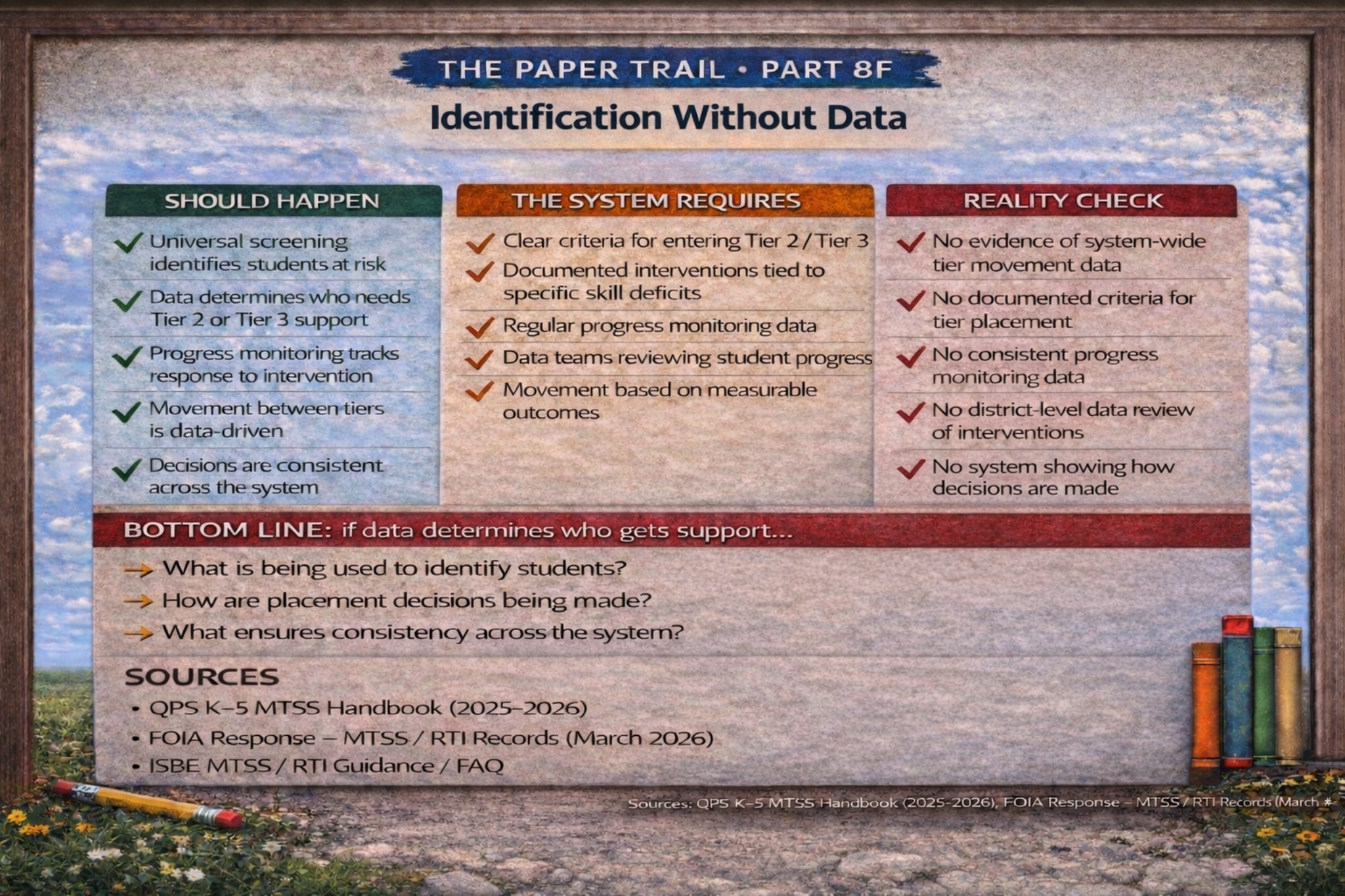
📊 What Should Be Happening
Students are identified through:
• Universal screening
• Benchmark data
• Progress monitoring
• Response to instruction
Movement into Tier 2 or Tier 3 is based on:
👉 measurable need
📄 What the System Requires
A working system should include:
• Clear criteria for entering Tier 2 / Tier 3
• Interventions tied to specific skill deficits
• Ongoing progress monitoring
• Data teams reviewing outcomes
• Movement based on measurable results
⚠️ What the FOIA Response Shows
Based on district records:
• No evidence of system-wide tier movement data
• No documented criteria for placement into tiers
• No consistent progress monitoring data
• No district-level review of intervention outcomes
🔍 Why This Matters
If identification is supposed to be data-driven…
👉 What is being used to determine who needs support?
👉 How are placement decisions being made?
👉 What ensures consistency across classrooms and schools?
This is where the system shifts.
From structured decision-making…
to something much less defined.
📦 EVIDENCE BOX
📄 QPS K–5 MTSS Handbook (2025–2026) • Defines MTSS structure and expectations
📄 FOIA Response — MTSS / RTI Records (March 2026) • No tier placement criteria provided • No system-wide progress monitoring data • No district-level intervention review
📄 ISBE MTSS / RTI Guidance / FAQ • Requires data-driven identification and intervention decisions
📂 Full Source Documents 👉 https://drive.google.com/drive/folders/1EVAP08rO4SvoAI3jkhIeTfmVwBLR_jv1
🔻 Final Thought
If decisions are supposed to be based on data…
and the data isn’t there…
👉 what are the decisions based on?
🔜 Next: Part 8G
From identification…
👉 to outcomes.